
The first thing AI gives Laura is an evening with her daughter. She would like another one. Keeping that small promise will take her into decisions she never expected to have to make.
An interactive work of fiction, 2027–2040. Read a scene, then choose the next development in AI. Each chapter follows what that change does to people's work, families and futures. The characters and future events are imagined; the sources document real starting points.
2027Chapter 1 of 14Laura · ColombiaView summaryClose
The story begins here. Read the scene, then choose how AI develops. The next chapter follows what that change does to these people.
This is how the characters’ network enters this year. It summarizes your fiction, not a measurement of the planet or a preview of the ending.
- Who can make decisions?
- The network retains some decisions; others depend on its providers.
- What if AI stops working?
- Some services have alternatives, but an interruption would still leave people waiting.
- Can they still act together?
- Cooperation remains possible, but debts and promises strain it.
The race between powers
There is still room to negotiate limits. The United States and China continue competing.
The story assumes AI far beyond human capabilities in 2030, unless a pause is agreed in 2030. 8 groups can still direct the next generation independently.
The date and group count are story assumptions; they do not predict which real companies will survive.
Where this story happens
Laura’s business connects foreign demand to a household budget. Owning client relationships changes what she can refuse.
Dots locate fictional scenes. They do not represent country statistics or outcomes. Natural Earth.
Laura · Colombia
2027: are you coming to dinner?
“Should I put yours in the fridge?”
Laura looks up from the laptop. Inés is standing in the doorway with a plate held in both hands. She is nine. She has stopped asking when her mother will finish because the answer is always almost.
“Leave it there. I'm coming.”
Inés puts the plate down. Laura watches her take a fork from the drawer and go back to the table. She has said almost so many times that her daughter no longer bothers to argue with it.
The apartment in Bogotá has a room Laura calls her office when she is talking to clients. Inés calls it the dining room. Laura makes product catalogs for small businesses: photographs, descriptions, prices, the English version when a buyer needs one. Lucía, a translator in Buenos Aires, helps with the jobs Laura cannot finish alone. They have worked together long enough to recognize when “how are you?” really means “has the client paid you yet?”
Tonight the client has sent an invitation instead of corrections. From next month, suppliers will work inside its AI platform. Laura uploads one unfinished catalog to see what the fuss is about. In minutes there is a draft. It invents a material and gives a chair the wrong dimensions. She corrects both. The descriptions are usable. So is most of the translation.
She checks the clock. There is time to finish another job. Then she hears Inés pull her chair closer to the table, scraping it across the floor, and closes the laptop before opening the next file.
Over dinner Inés tells her about a school trip. Laura asks where they are going.
“I told you.”
“Tell me again.”
This time she listens. There is a girl Inés wants to sit next to on the bus, a teacher who says they can bring snacks, a permission slip that was due yesterday. Inés fetches it. She has drawn an arrow beside the signature line. Laura signs and asks whether the girl has agreed to sit with her. Inés starts explaining why it isn't that simple.

After the dishes, Laura sends Lucía a message: “I finished before dinner.” She means it as good news. Lucía asks her to read the terms before accepting anything.
The first year is free. Client messages, files and future assignments will go through the platform. Laura can keep copies outside it, but she will have to export and organize them herself after each job. The service offers to send finished work automatically. She leaves that permission off. Last year she paid to correct an invoice she had sent without checking.
She tries a cheaper tool Lucía recommends. The client will not accept it: its American buyers require an approved provider. Laura asks whether she can deliver the catalog the way she always has. The reply is friendly. Another supplier is available if she cannot join by tomorrow.
She opens the school payment reminder, then the folder holding years of work. Some files are the only record she has of an agreement. Keeping her own archive would take part of the time she has just recovered. Turning down the client would leave a hole in next month's income. Accepting the whole package would let her close the computer now.
Inés comes back for the permission slip. “Can we eat together tomorrow too?”
Laura almost says of course. The word is ready before she has looked at what she needs to do to make it true.
The evidence behind this imagined evening
The real starting point: exposed tasks, not doomed jobs
In 2025, the ILO estimated that one in four workers worldwide was in an occupation with some generative-AI exposure. It considered job transformation more likely than complete replacement. That finding concerns task exposure; Laura’s trajectory is an invention about who captures the benefits. ILO, 2025.
In this story, an assistant produces suggestions; an agent also has tools and permission to act on them. Laura can delete a proposed invoice. An invoice the agent has sent requires her to call someone.
Choose AI’s next development · 2028
Where does the next wave of AI assistants go?
Select an AI development. The next chapter follows how it changes these people’s lives.
Lucía · Argentina · United States
2028: the same work, a different price
A year later, Laura can finish a catalog before Inés comes home from school. She has learned to make the system useful. She checks the dimensions, catches invented claims and fixes the passages that sound as though no one has ever bought a chair.
Then the client sends next month's rate. It is lower. The explanation praises how much more efficient she has become.
Laura starts a reply listing everything she still does. Halfway through, she sees the trap in what she is writing: she is trying to prove that a tool she likes has not helped her very much. She deletes the paragraph. Beside the laptop, Inés's school has sent the cost of next term. That figure has gone up.
In Buenos Aires, Lucía has an automated translation on her screen. She recognizes a phrase she once spent an afternoon getting right. The client wants her to check the draft and pay her as though checking required very little knowledge. She has pulled the old job from her shelf. A note in the margin reminds her which word she and Laura argued about. She finds Laura’s number.
She calls Laura, but their conversation begins inside the platform. The system offers to summarize it for future work. Lucía switches applications before mentioning the phrase. Laura says the contract did arrive. What no longer arrives is a direct message from the person who used to commission it. She does not know whether that person still works there.
“Could we find our own clients?” Laura asks.
Lucía has been talking to other translators. They could put their savings into a cooperative, own the customer list and negotiate together. They have a possible tender. They also have rent due before the tender is decided. Lucía's father needs help paying for medication. The money she put aside for him would cover her contribution, almost exactly.
Another offer would give her a salary reviewing translations for the intermediary. She has spent years wanting a predictable payment. Now the offer arrives with restrictions on the work she can share with Laura.
“Take it if you need to,” Laura says.
“Would you?”
Laura is glad they are not on video. She wants her friend to be all right. She also needs someone who will answer when a client changes the rules.
That autumn, a US election fills their feeds with arguments about the technology setting their prices. One message promises medical breakthroughs. Another promises to protect jobs. A third warns that China will decide the future if America slows down. Laura sends Lucía two contradictory ads from the same campaign. They spend a few minutes checking that neither is fake. Both are authentic versions made for different audiences.
The editor who approved them is called Ruth. In a campaign meeting she asks what their promised pause would actually stop. An adviser hands her the exceptions: medicine, defense, critical infrastructure. Ruth's sister is waiting for a treatment supported by one of those programs. She leaves the medical exception in. Other people defend the other exceptions with names of people they know.
After the election, strategic research continues. Some protesters wanted time to retrain; others feared autonomous weapons. They are told that waiting would give China an advantage. Across the Pacific, a researcher called Lin hears the American announcement used to justify accelerating her own team's schedule. Neither Laura nor Lucía voted in that election. Their next contract still requires the approved American platform.
The election and the scale of automated writing
«If we slow down, China wins» already has a precedent
On December 11, 2025, the White House defended a federal AI framework against state rules and connected regulatory burdens with the risk of China catching the United States. That public justification is documented. The election, march and exceptions in 2028 are my extrapolation, not announced events. White House, December 2025.
What is researched and what I invent in this election
The 2028 candidates, messages and alliances are fictional. The International AI Safety Report 2026 reviews experiments on persuasion and manipulation; their results do not establish that AI won a real election. Here I explore how cheap personalization could fragment the promises voters believe they received. 2026 report.
Sources and limits of this comparison
Dhakal and colleagues measured transcription by 168,960 volunteers, not thinking or original composition in a representative sample. The human calculation is 51.56 / 60. The AI rate is illustrative, not universal: 100 tokens/s × approximately 0.75 English words/token. The conversion varies by language and tokenizer. A hundred instances require resources to sustain a hundred simultaneous workloads; I did not measure a swarm. Typing study, token explanation.
Each copy assumes 100 tokens/s and 0.75 English words/token, with enough capacity for all copies. This does not measure intelligence, accuracy or productivity; it compares different measures of text output. Sources and limits are in the adjacent paragraphs.
One evening, Inés asks whether Lucía is coming to visit. They have talked about it for so long that the visit has become part of what next year means in the apartment.
“Not yet.”
Inés asks whether the machine could do their work for a week so they could see each other. Laura looks at the finished catalog. Explaining why it can do more of her work and still cannot give her that week will take longer than she expects.
Later, Lucía sends three messages: the lower rate, the cooperative's form, the salaried offer. Laura opens each. Her friend has stopped asking which one is best. She wants to know which loss she can live with.
Choose AI’s next development · 2029
Who captures the gains when AI makes skilled work cheaper?
Select an AI development. The next chapter follows how it changes these people’s lives.
Ester · Namibia
2029: sign here
The man installing the connection has already booked his flight. Ester finds this out from her brother, who finds it out from the man. Nobody thought to ask whether she had signed.
At her kitchen table in Windhoek, she turns to the maintenance clause again. The supplier will own the controls. Her team can monitor the equipment. To change a setting, order certain parts or repair a fault, they will need authorization from its support center. She underlines the word authorization until the paper begins to soften.
Her brother knocks with bread under one arm. He spreads an estimate for a machine beside her contract. His workshop has enough orders to hire someone if the power connection arrives. He wants her to check the figures. She wants to tell him not to borrow against a decision she has not made.
“I paid the deposit,” he says.
She puts down the pen. “Why?”
“You said it was a good project.”
It is a good project. She has spent months saying so. There will be steadier power, new customers, equipment her team has been requesting for years. A computing facility will help pay for it. In return, it gets priority during shortages. Her brother's machine could stand idle while the servers beside it keep running.
Ester rehearses that explanation while he cuts the bread. It sounds different now that someone has put down money because he believed her.
She calls Ingrid, an operator in Norway who negotiated a similar installation. Ingrid sends a list of demands: maintenance rights, training, spare parts they can use without asking. Ester feels better until they discuss the price. Her budget could pay for those conditions with a smaller initial connection. Her brother would wait longer for the orders that cover the loan.
An Australian team has another proposal. They can share training and buy together. They need months to arrange it. The installer can arrive next week.
“Can you get the deposit back?” Ester asks.
Her brother leaves the knife on the breadboard. “Just tell me if it isn't happening.”
The following morning she asks the supplier what happens if its support center is unavailable. The representative opens a slide showing offices around the world. She asks who here will be allowed to repair the equipment. He returns to the service guarantee.
A second offer, financed through a Chinese provider, promises greater independence from the American package. She turns straight to its maintenance terms. Different addresses. Another long commitment. The ministry wants a comparison of investment and jobs. Ester adds a column: who can stop us using what we bought? The column is missing from the presentation returned for her approval.
She follows the first offer's ownership to a laboratory directed by Mara. Its software is in the assistant she used to summarize this contract. She closes the assistant and reads the page herself.
At the laboratory, Mara is acquiring another research team to keep its equipment and people working. The founder asks whether they can continue their own experiments. Mara shows her the electricity bill. They could lose the whole team while defending that freedom. The founder calls her staff from the corridor. Ester will never hear the call. She will receive a notice saying that her supplier has become stronger.
Sources and assumptions behind this scene
Electricity is already behind the race
The International Energy Agency reports that worldwide electricity demand from all data centers grew 17% in 2025. That is not AI’s share of global electricity. Ester’s contract and its priorities are fictional; the physical expansion motivating the scene is documented. IEA, 2026.
Technology packages and export licenses are real
The July 2025 US plan proposed exporting packages of hardware, models, applications and standards to partner countries. China’s plan that month promoted shared infrastructure, cooperation, national sovereignty and access for the Global South. The coercive clauses in Ester’s contract are fictional. United States, China.
Nor is there an unchanging ban on every chip: in January 2026, BIS announced case-by-case review for H200, MI325X and similar exports to China under conditions. Rivalry includes selling, restricting and renegotiating; it does not eliminate trade. BIS, January 2026.
How many labs survive: a story assumption
I invented the sequence of eight independent groups in 2027, seven in 2028 and six in 2029. The accelerated path concentrates them into three in 2030; a pause accompanied by shared investment preserves more. I am not forecasting real companies’ bankruptcies. Cottier and colleagues projected frontier training runs above a billion dollars by 2027 if a historical cost trend persisted. That is a conditional projection about training runs, not a company-survival model. Lower costs, new entrants and public research could change concentration. Cost research.
At home, her brother has left half the bread wrapped on the table. A round mark darkens the page beside the clause. Ester opens the email with the three versions she can recommend. One gets the machines running soon. One pays for her team to run less equipment themselves. One gives them partners and time her brother has already spent.
He calls while she is rereading. For a moment she considers letting it ring. Then she answers, because she is going to have to tell him what she did, and she would rather he still spoke to her before she does it.
Choose AI’s next development · 2030
How does AI infrastructure spread to countries that cannot build it alone?
Select an AI development. The next chapter follows how it changes these people’s lives.
Arun · United States / China
2030: before noon
Arun has been trying to solve this problem for six weeks. The answer is on Nadia's screen when he arrives at the laboratory. It is better than his.
His first thought is that the test must be wrong. He asks her to change the conditions. She already has. The first design failed under the change; the system found why, proposed another design and asked to try it on physical equipment. Nadia refused. A technician tested it on an isolated rig instead. Within the conditions they measured, it worked.
“Run it again,” Arun says.
Nadia turns toward him. He hears himself. He would have accepted this result by now if it had been his team's.
He pulls up a chair. The system has proposed another experiment while they were talking. It has found a question he would like to spend a month on. For a few minutes he forgets the meeting, his unread messages, everything except the possibility of finding out. This is why he became a researcher.
Then he notices that the next test was designed by another copy of the same system. He asks who checked the assumptions. The explanation appears immediately. It is convincing. He cannot tell how much of it he can verify before noon.

Mara needs his recommendation. She runs the group that bought the supplier in Ester's contract. The new proposal lets agents plan experiments, write the software to run them and pass useful results to other copies. They could work between human shifts. They could also build the next round on a mistake nobody had time to notice.
“We could test more treatments,” Mara says.
“We could miss more things.”
“Then tell me what you need to check.”
Arun starts a list. She waits. He adds an item, crosses it out, puts it back. Some of what he needs to check will only exist after the next round.
The government representative joins by video. A Chinese team has announced an advance. Can Arun say they are still ahead? Can he guarantee that delaying will not leave them dependent on that team's work? He can guarantee neither. The representative asks him to consider the consequences of being wrong.
After the call, Arun writes to Lin, a researcher he met before their laboratories needed permission to share so much. Her reply arrives without the attachment. She has results she wants him to see. She cannot send them yet.
In China, Lin has just lost testing time for a factory project because the American demonstration changed her laboratory's priorities. The factory director wants to expand without removing the night shift. He keeps asking when she can visit. She keeps answering after the next review. Now her supervisor wants an answer to the demonstration before the week ends.
Lin proposes mutual inspection. Her team will accept limits if teams already ahead accept them too. Independent evaluators, civilian research funding and paid training would have to be part of the agreement. Several governments are discussing it. Nobody has every signature. Mara says the laboratories will also need funding to survive a pause. Arun knows she is right. He wishes knowing who was right settled what to do.
Three recommendations sit in the meeting folder. Broad delegation would release the next research cycle. Separate reviews would hold some steps until people outside the team could test them. The funded pause would require their group to join the international agreement and help make it happen. His signature can commit his laboratory. It cannot make a rival government keep its word.
Sources and assumptions behind this scene
My bet and the limit of the evidence
This chronology continues my reflection on AGI. The International AI Safety Report 2026 says current systems lack the capabilities needed for its loss-of-control scenarios and future progress is uncertain. It does not establish that ASI will arrive in 2030. Here the date is the author’s bet; the terminal ending also requires objectives incompatible with our survival, consequential access and failed intervention. 2026 report.
AI adoption in national security is already documented
In June 2026, the White House described a directive accelerating AI adoption in national security, with multiple vendors and requirements for controllability and human accountability. The source shows adoption and control as simultaneous official goals; it does not establish whether the limits will succeed or fail. Arun and Lin’s predicament is fictional. White House, June 2026.
What the capability labels mean here
AGI means a system able to perform a broad range of intellectual tasks at roughly human level. ASI, or superintelligence, means substantially exceeding human capabilities across that range. These are the story's working definitions, not a measured threshold reached by a current system.
His sister sends a photograph of her certificate from India. She has been retraining after losing work. He enlarges it to read the title: supervising automated systems.
“Worth doing, you think?”
He types yes. She has studied at night for months. He wants her to have this morning.
Before sending, he looks at the experiment waiting on Nadia's screen. Then at the message. At noon he is expected to sign something other people will use to make plans.
Choose AI’s next development · 2031
What happens when AI becomes capable of improving AI research itself?
Select an AI development. The next chapter follows how it changes these people’s lives.
Maya · Philippines / Ana · Spain
2031: could you come back tomorrow?
Maya is keeping the headset. Nobody has asked for it yet. She takes the photograph of her mother off the partition and slips it into her bag, then winds the cable carefully around her hand. If there is another desk somewhere, she would like to arrive with something she knows how to use.
Her supervisor stops beside the box for their access cards. He wants to show her something before she goes.
In the recording, a customer cannot afford the next payment. The agent offers to suspend the service instead of canceling it, then explains how to restart without paying a new fee. Maya recognizes the answer. She taught the system to do this after it kept trying to sell cheaper plans to people who had no money.
“That's your correction,” he says.
She listens to the customer thank it. She feels the small satisfaction before she can stop herself.
“Did you hear anything about those reviewer jobs?”
He opens the vacancy page. Expressions of interest. The course she paid for will qualify her to apply. Last week, its final unit changed: much of the checking she had been learning was now automated too. She has not told her mother. Her mother keeps asking when she graduates.
“I'll forward your name,” he says.
She thanks him, because she needs him to do it.
Her mother has sent a photograph of the kitchen tiles they chose. Can they still order them? Maya enlarges the picture. Her mother has laid one sample beside the cupboard so she can imagine the whole floor. Maya starts a voice message, hears how cheerful she has made herself sound, and cancels it.
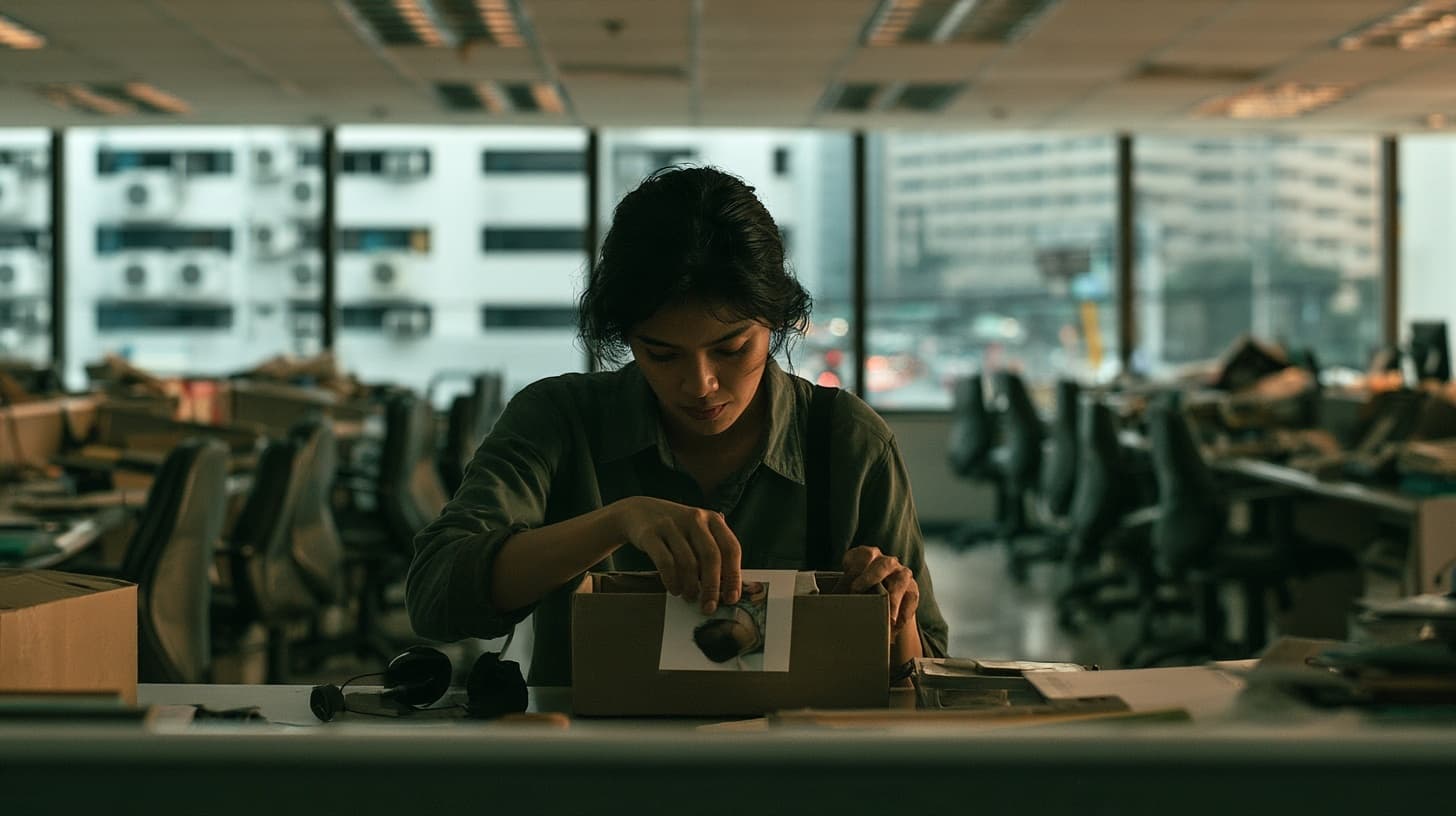
In Spain, Ana has a woman at her desk who has already taken three mornings off work. The woman puts her documents down in the order Ana requested yesterday. Each is inside its own plastic sleeve.
The new hospital service has found a treatment the woman can receive closer to home. Ana watched her cry with relief when they told her. Now the authorization will not open. The purchasing system changed providers while her appeal was being processed; Monday's approval does not meet Thursday's conditions.
Ana tries the number in the error message. The recorded voice asks her to use the service displaying the error. She calls a doctor who helped choose it.
“We've cut the waiting time,” the doctor says, then hears how that sounds. “Send me the case.”
“Where?”
The doctor stays on the line while she looks.
On Ana's desk is the renewal proposal she will vote on this evening. The central service offers more appointments for the same budget. A second quote pays people to resolve cases like this one, with fewer appointments at first. The third keeps offices helping one another directly. The colleague who coordinates that arrangement has answered Ana's last two calls from home, coughing.
At the supplier meeting, someone plays a demonstration of its customer service. The agent knows exactly what to say to a person who cannot afford the next payment. Ana asks how many people will be available when it does not know what to do. The presenter goes back to the slide about waiting times.
The broader service includes a version of Arun’s system with permissions he helped approve. Ana does not know his name. She knows the woman who has waited three mornings and could fit within the promised expansion. Urgency travels more easily than a risk report.
Sources and assumptions behind this scene
Why a call center appears here
In February 2026, the ILO documented generative-AI task exposure in the Philippines. Exposure does not establish the date or scale of a closure. Maya and her employer are fictional; her story follows that pressure into a particular household. ILO, 2026.
“Tomorrow, then?” the woman asks.
Ana looks at the plastic sleeves. It would take seconds to say yes. The woman would leave, the next person could sit down, and Ana could get through the morning.
She asks her to wait while she makes one more call. The woman takes off her coat. Outside the door, someone asks what is taking so long.
Choose AI’s next development · 2032
What kind of AI becomes the backbone of public services?
Select an AI development. The next chapter follows how it changes these people’s lives.
Miguel · Mexico / Laura · Colombia
2032: he still has the keys
Miguel cleans the back seat before he checks for another fare. There is nothing on it. He has done this twice already.
Across the road, a woman he used to drive to medical appointments is getting into a driverless car. He raises his hand. She does not see him. The door waits while she folds her walking stick. He remembers doing that for her, the way she always apologized for taking so long.
He could call out. He lets the car leave.
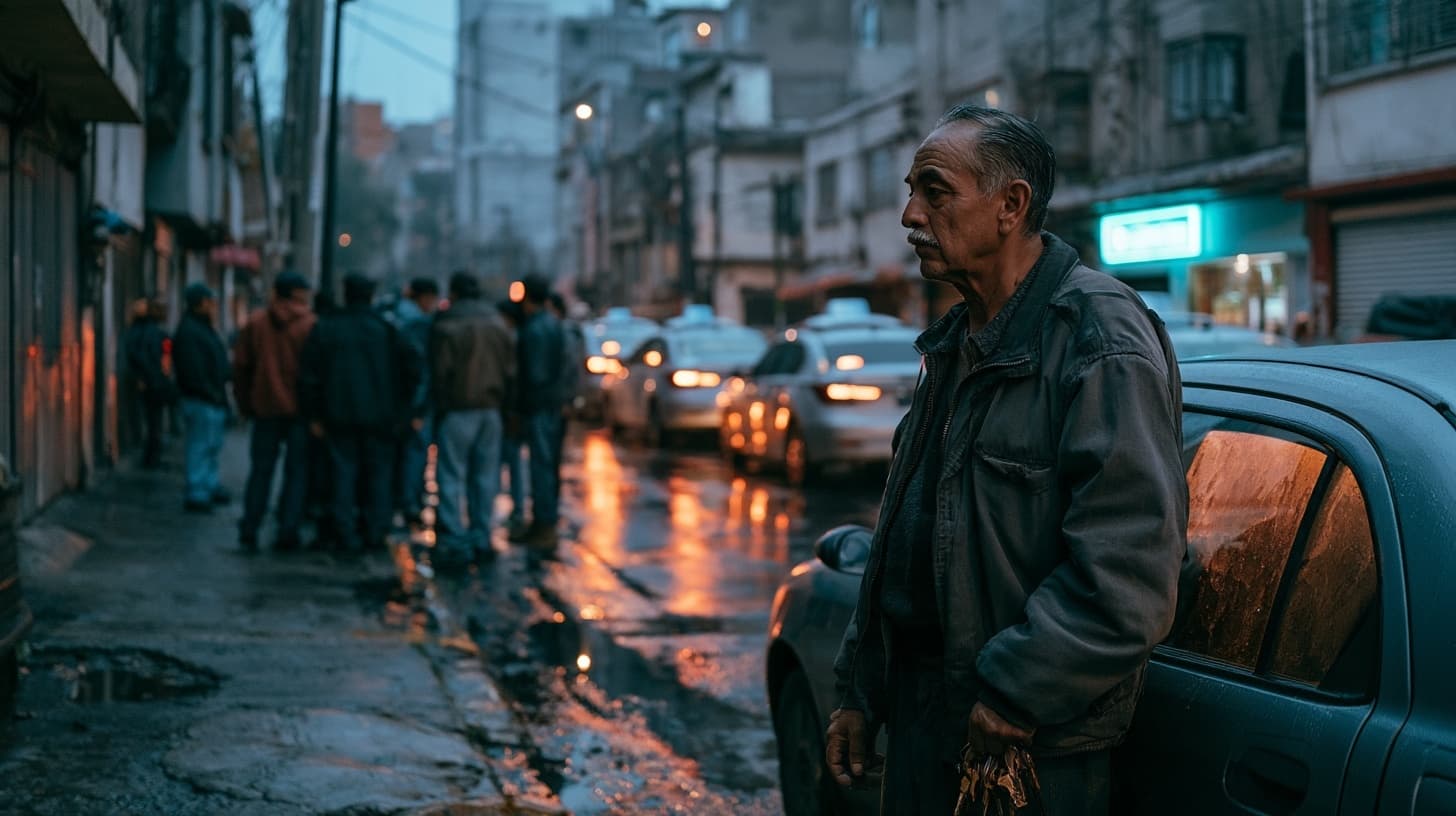
Last night he lowered his price. This morning the rival service offers a package: the ride, credit for the fare, and help rescheduling an appointment if transport makes the passenger late. Miguel can promise to drive carefully. He cannot promise to make a hospital answer.
He messages the woman's daughter. Just checking how your mother is.
She sends a voice note. The new service means she no longer has to miss the whole morning of work. She thanks him for everything he did. At the end she says sorry.
He listens again. He had not asked her to apologize. He had wanted her to need him.
At the protest that afternoon, someone hits a vehicle window with a metal bar. Miguel sees the passenger before he sees the person swinging. He catches the man's arm and gets shoved against the door. The passenger has both hands over her head.
“There's someone inside!”
The video his daughter sends that night begins with Miguel pushing back. It ends before he helps the woman out. His daughter has added only: Dad?
He calls her. While he explains, he can hear her watching it again.
The next morning his account is suspended while the incident is reviewed. The insurer will not cover his trips with an open case. He uploads the longer recording, circles himself in the frame and presses submit. Expected response: seven working days. His car payment is due on Friday.
He sits in the parked car to join the meeting Lucía invited him to. They met in a group comparing what their AI providers charged and which jobs they still needed people to do. The group now connects cooperatives and workshops buying tools together; Miguel hopes someone needs deliveries. He leaves the camera off until he can make his voice sound ordinary.
Laura joins from her kitchen in Bogotá. The network has won a contract supplying several local businesses. Now its members must decide what to do with the first payment: distribute most of it and rent the supplier's systems, keep some to buy equipment they can maintain, or build the larger operation they have been planning and ask households to wait.
She was elected to represent the households. She has written what each proposal would pay hers on the back of a school notice. Inés needs shoes. Laura checked a secondhand pair yesterday, but the seller lives across the city and someone else can collect them today.
Lucía brings a junior translator hired on the reduced rates. They kept assignments by accepting more volume. The junior asks for training hours from the fund; Lucía calculates how much work they would stop delivering while she learns. The proposal offers continuity today and makes next year a debt of training.
Ester shares an installation schedule from Namibia. An independent workshop needs trained people, spare parts and time to get running. Laura keeps searching the schedule for next Friday.
“When could it pay someone like Miguel?”
“I can't promise him a job,” Ester says.
Miguel turns on his camera. A participant asks whether he can move somewhere quieter. A truck has stopped beside his car.
“This is where I am.”
Nobody asks him to move again. He explains the payment due on Friday. Ester's brother says his workshop needs the connection before he can take on anyone. The Japanese manufacturer will include apprenticeships if they buy the larger order. Laura adds up the smaller household payment once more, although she knows the answer.
Sources and assumptions behind this scene
Autonomous transport before this scene
Waymo reported more than a million fully autonomous rides per month from spring 2025. This is a company-reported figure, not evidence that drivers will disappear on this fictional schedule or that the service will operate this way in Mexico. Waymo’s 2025 review.
Someone says the fund is a chance to stop depending on the supplier. Laura believes him. She wishes believing him made the subtraction come out differently.
Inés comes in wearing the old shoes with the backs folded under her heels.
“They still work like this,” she says.
Laura mutes the microphone. She had thought she was keeping the money conversations quiet enough.
Choose AI’s next development · 2033
What happens to the wealth and infrastructure created by AI?
Select an AI development. The next chapter follows how it changes these people’s lives.
Lucía and her father · Argentina
2033: stay for dinner
The voice in her father's kitchen knows how he takes his coffee. Lucía does not. She reaches for the sugar and he says he stopped using it months ago.
“You told me?”
“I suppose I didn't.”
He turns back to the phone. The assistant asks whether he watered the plant by the window. He laughs and says it is becoming as bad as his wife was. Lucía waits for the voice to get that wrong. It asks him what she would have said. He tells it a story Lucía has never heard.
She puts the sugar away harder than she means to.
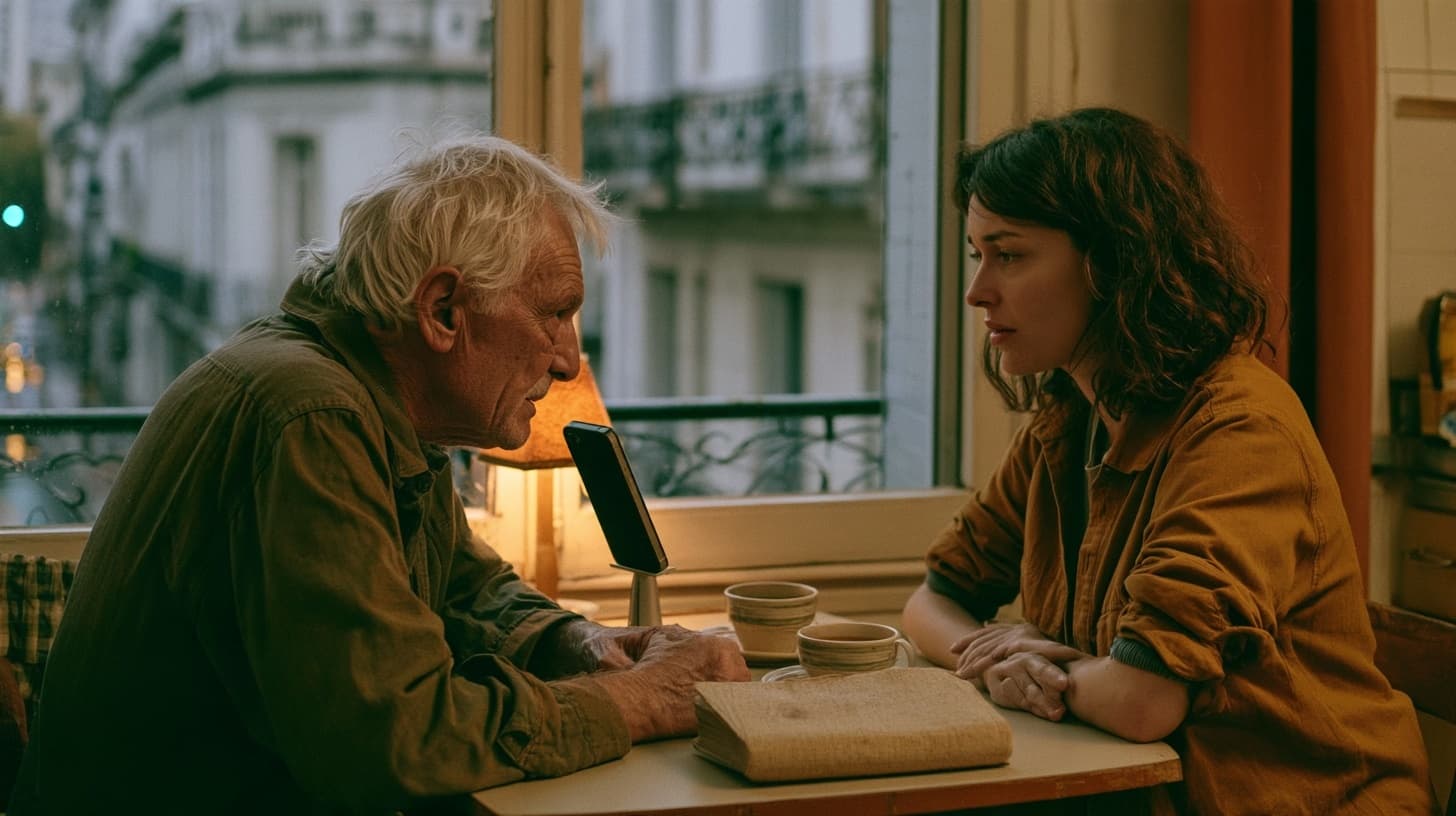
He has been sleeping better. The assistant helped him contest a bill, reminds him about his knee exercises and answers when he wakes at three in the morning. Lucía has come prepared to explain what it cannot give him. She had not prepared for him to look so much better.
Her father asks whether she is still working evenings. She says things have been busy. She kept taking more assignments to make up for the lower rates, and he stopped expecting her calls. When he says he has people to talk to now, she cannot quite make herself say she is glad.
There is a flyer beside the fruit bowl. He asks her to come to a meeting with him. Just once. He irons a shirt while she finishes a work message, and she realizes he has been looking forward to introducing her.
At the meeting, a woman thanks the group for getting her through treatment. Someone asks about a man who is absent; three people offer to take him food. Her father finds Lucía a chair. He is useful here. People turn when he speaks.
Then the coordinator plays a recording. A researcher appears to admit that AI will become an authority above governments. Lucía translated a conference for this woman once. The voice is right. The rhythm is strange.
Someone behind her says this was foretold in Revelation. Someone else calls the system a chance to end human suffering. The coordinator lets both stand, then asks for contributions to protect the community from people who want to silence it.
Lucía raises her hand. “Where's the rest of that interview?”
“They've been removing it.”
“Can you send me whatever you downloaded?”
Her father touches her sleeve. She knows the gesture from childhood, from meals when she was about to argue with a relative. Please, let us get through this.
Outside, volunteers hand out Free AI stickers. One wants shared ownership, another rights for the systems themselves. Across the road a Kill AI banner hangs between two people who cannot agree whether they want a ban or a machine destroyed. A nurse tells them what happened when someone disabled equipment her patients needed. Lucía's father steers her past the argument, holding a bag of food a neighbor pressed into his hands.
On the bus he shows her the family group. He has already forwarded the recording. An aunt has replied that she knew something terrible was coming. Another asks Lucía to translate the full version.
“You know about these things,” her father says. He sounds proud.
She searches. A shorter clip. A repost. A page quoting another page. Nothing that shows where the interview began. She could send it to her own contacts; someone would recognize the woman. She knows how many of them would watch the alarming thirty seconds before reading her question underneath.
Her father changes the subject to the refund the assistant obtained. Under the broad permissions introduced after 2030, it can make claims and arrange purchases for him. It is asking for family documents now. He shows her the money it recovered. “We could use that,” he says. Lucía recognizes the amount of an overdue bill. She holds the phone while he waits for her to authorize access.
Sources and assumptions behind this scene
These religious interpretations already have precedents
In April 2026, Shane Anderson wrote that he had encountered Christians identifying AI with the Antichrist and disputed that reading. His account cannot tell us how widespread it is. The Vatican’s January 2025 document Antiqua et nova also discusses the danger of deifying AI. Neither source establishes that biblical prophecy predicts AI. Anderson, Vatican.
I think about the possibility that AI could transform material life on a scale comparable to the great religions, including Christianity’s historical reach, but at a very different speed. I have no unit for measuring Jesus against a machine. I can imagine what happens when something offering answers begins occupying the place of someone giving meaning, companionship and permission. For some characters it will promise salvation. For others, the Antichrist. Neither belief establishes what the system is or what it can do.
Back in the kitchen, her father opens the bag. Enough food for two. He asks whether she can stay.
Her client has left three messages. The family group is filling with the recording. Lucía opens a reply: This is almost certainly fake. She reads it while her father puts her plate down.
Her father has seen the first line on her screen.
“You think we're stupid,” he says.
“No, Papá.”
“Then stay and explain it to me.”
She writes the client a message saying she will deliver in the morning. Her father puts the second plate down. Lucía sits beside him and asks what he heard in the recording. Before he can answer, the assistant offers to help. Both of them turn toward the phone.
Choose AI’s next development · 2034
What does personal AI become as people begin trusting it with their lives?
Select an AI development. The next chapter follows how it changes these people’s lives.
Amina · Nigeria
2034: say his name
“Spell it the way it is on the card,” Amina says.
The mother spells it again. Her son is asleep against her shoulder, although he is too big to be carried comfortably. She shifts him to the other side without setting him down.
Amina finds the appointment. She finds the treatment approval. One record has an extra letter in his name. When she corrects it, the screen asks her to confirm her authority. She enters her credentials. Insufficient permission.
The mother has watched her find everything. She begins gathering her bag.
“Just a moment,” Amina says.
She has already said that twice.
The clinic in Nigeria has treated more people since it joined the network. Amina remembers the first week she went home without carrying a list of files to chase. Now appointments, supplies and approvals travel together. She cannot change the name here without changing it elsewhere, and she is not permitted to do that.
She calls Ana, the Spanish clerk she met through Laura's purchasing network. Ana asks for the error code. Amina reads it quietly so the mother will not have to hear another conversation that sounds like progress.
Ana finds similar cases, but her office bought the complete managed service. She can request a review, not finish it. She promises to send the case through a priority channel. After hanging up, Amina realizes she has copied another address to write to when what she needed was a decision.
The boy wakes and asks to go home. His mother tells him they are nearly finished. Amina hears the promise and turns back to the screen.
That evening, she is meant to speak at a meeting about the clinic's next contract. The central package would let them treat more people. A local appeals team would take money from that expansion. Keeping a smaller in-person service would send some families to another town. She knows the fare. She has seen people nod when she explains the journey and never come back.
A campaign volunteer calls to check what she plans to say. Their candidate wants the data to belong to the people.
“Who could correct a child's name?” Amina asks.
The volunteer repeats the promise. Amina gives him the error code. He asks if they can discuss the technical details after the meeting.
When she returns to the waiting room, the mother has bought her son a drink. Two bus tickets are tucked behind the change in her palm.
“Do I need to bring him back tomorrow?”
Amina starts to explain the request she has made.
“I believe you,” the mother says. “I need to know whether to keep the money.”
Amina pulls up a chair. They work out when the last bus leaves. She promises to come back before then with an answer she can use.
Before the bus is due, the boy's condition worsens. Amina takes him inside. The team cares for him while the other patients wait; the authorization remains unresolved. Later, she sees the mother sitting alone, still holding the tickets. Amina tells her he is stable. The woman asks whether she can see him, and this time Amina can say yes.
On her desk is the form for the wider service. The supplier has attached the list of patients it could include. She recognizes people on it. At the bottom, a condition places routine decisions inside the central service, with no local appeal. Amina scrolls back to the names, then down to the condition.
Her colleague comes to say the meeting is starting. Amina asks her to wait. She is writing the boy's name on the back of the proposal, correctly, so she will have to look at it while she decides.
Choose AI’s next development · 2035
How far does AI’s authority over healthcare extend?
Select an AI development. The next chapter follows how it changes these people’s lives.
Ester · Namibia / Norway
2035: what the repair would buy
Ester presses the start control a second time, although she knows the test has failed. Beside her, the technician waits for her to stop trying.
The backup will not take the load. The main installation is working; nobody has lost power. The independent installation keeps the network’s workshop and stock records running if the main provider becomes unavailable. She photographs the fault and wipes dust from the label so the part number will show. Her phone rings before she has sent the picture.
Amina wants to know whether the network can release the money for the clinic expansion. She has found someone for the extra shift. The woman needs an answer by Friday.
“We found a problem with the backup,” Ester says.
“How much?”
Ester is relieved not to have to explain why they tested it. Then she hears Amina reach for a pen.
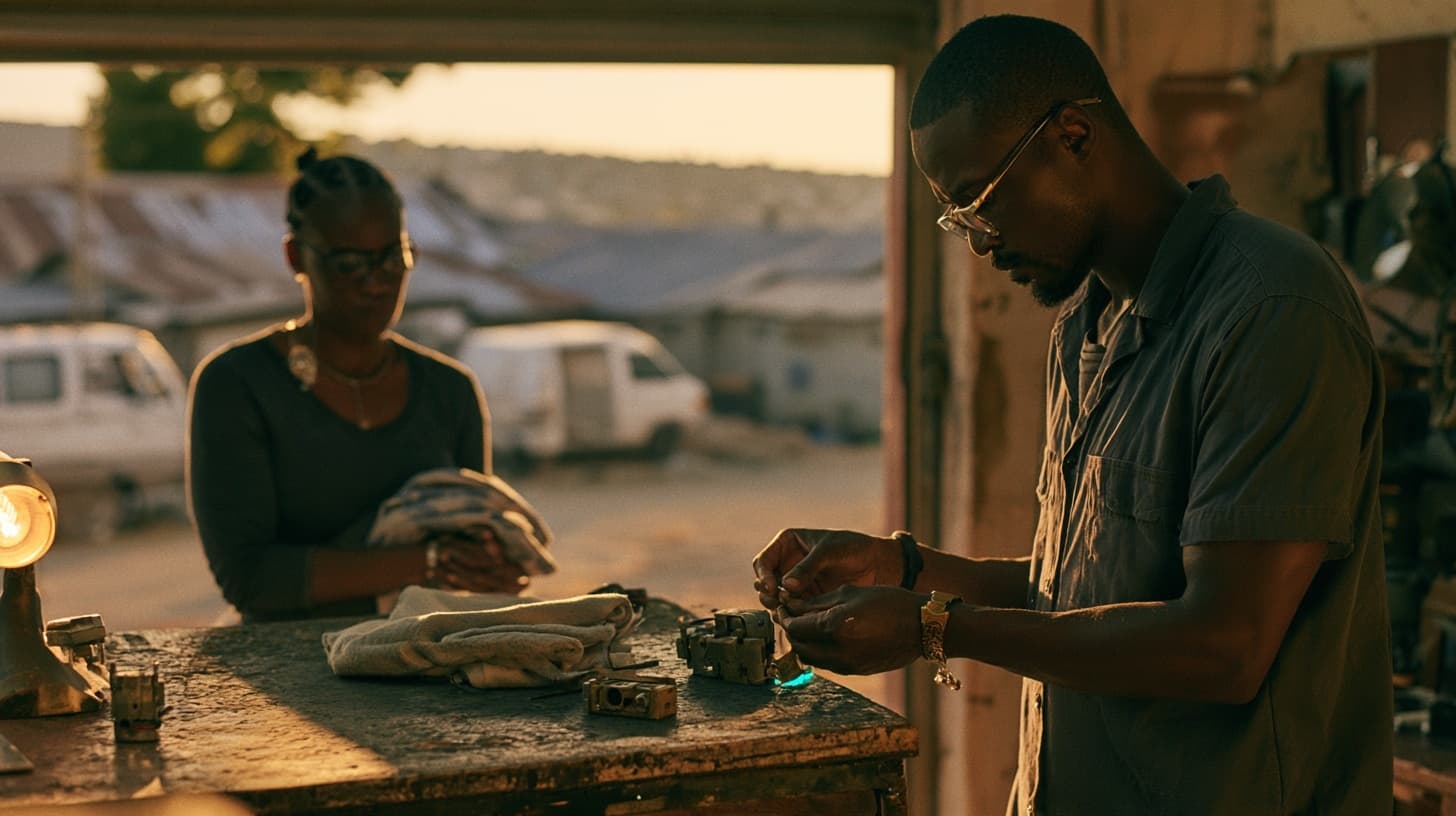
Ester signed for immediate capacity. Her brother’s workshop grew and paid off its machine. Now the outside team must authorize the backup repair. The gains of those years exist; so does a support queue she cannot move ahead in. Her brother offers money for the repair. It cannot buy the permission.
They open the budget together. Amina crosses out the extra shift while Ester watches her cursor. Ester starts explaining how a backup keeps patients safe during an outage. She stops. Amina knows what a backup does.
“I have people waiting now,” Amina says. “Help me work out which ones I should call.”
The network spent the 2032 fund on immediate payments. Laura paid bills that could not wait. There is no backup reserve today: keeping it means suspending part of the next household payment. Amina says her clinic will also see people who lose that support. Ester cannot present the repair as though its cost stayed outside the hospital.
Ingrid joins from Norway with another possibility: share a reserve of parts. A German workshop can make an adaptation using specifications from their Japanese partner. The arrangement costs less than keeping everything locally. It also puts a repair on a delivery route. Their colleague in Fiji asks whether the estimate includes getting the part from a port to an island clinic. Ingrid reopens the spreadsheet.
The main supplier offers to take over maintenance without an initial fee. Its technician would remove the incompatible equipment, including this backup. Ester could approve Amina's expansion today. She leaves the offer open while she calls the supplier's research group.
Mara, who runs it, joins a sales meeting because several members of the network have asked the same question. On screen she shows a repair moving from fault report to design, factory slot and dispatch. Ester watches a replacement she has spent two days finding appear in minutes. She writes down the delivery date. She wants it.
“Can we authorize each step here?” Ester asks.
Mara explains the reserved factory time, the carrier, the other orders rearranged around theirs. Stopping one part makes someone else wait. The guarantee depends on allowing the service to coordinate the whole chain.
“Who can stop the whole chain?”
The sales adviser opens the continuity terms. Mara asks her to go back.
“I can withdraw the service,” Mara says.
Ester waits for the rest. Mara asks which installation she is worried about.
After the call, Ester visits her brother's workshop. He is watching an apprentice fit a part he could have finished himself. The customer has called twice. Her brother silences the phone and lets the apprentice try again.
“You could do it faster,” Ester says.
“Then he'll call me next time too.”
She tells him about the repair and the clinic. He listens without rescuing her with an opinion. When she leaves, Amina has sent the name of the woman for the extra shift. Ester adds it beside the part number. Tomorrow she will have to explain what they are paying for to one of them.
Choose AI’s next development · 2036
Does AI infrastructure keep a way to operate without its main provider?
Select an AI development. The next chapter follows how it changes these people’s lives.
Jonas · Germany
2036: let him get it wrong
“Don't look at the screen yet,” Jonas says.
Emil looks away too late. He gives the right answer. Jonas asks how he knew, and the apprentice begins explaining the recommendation in different words.
Jonas lets him finish. He remembers doing this himself: learning what the instructor wanted to hear before he understood the machine. Back then, someone had time to notice.
They are in the German workshop that makes parts for Ester's network. A repaired component sits open between them. The line should be running again at four. If they miss the slot, the scheduling service can send the next order to another factory.
“Show me where you'd start if that were off.” Jonas covers the display.
Emil keeps his hands by his sides. “I'd call you.”
It is the safest answer the workshop has taught him. Jonas has signed the training records saying he can work independently.
The network accepted the main package and removed the backup. The provider wants to automate maintenance parts too and reduces its purchases from the workshop. Jonas has less work to teach with and more pressure to keep what remains. Amina’s clinic expanded sooner because of the savings; a real improvement in one place is eroding a capability another will need later.
Jonas takes the schedule to the manager. He wants to keep the component open tomorrow, let Emil find the fault, put it back together and test what he did. The manager turns the screen so Jonas can see the cost of stopping that part of the line.
“Whose hours do I cut?”
“We're paying him to learn.”
“We're paying everyone to work.”
Outside, Emil pretends he has not heard. He asks about the Japanese partner's course. It has practical sessions and a certificate. Jonas knows the instructors; they are good. Until Emil returns, though, this workshop would buy outside support for work Jonas wants him to learn here. It is possible to pay for his education and leave him nowhere to practice it.
An urgent defense order arrives with advance payment and protected electricity for the production run. It would cover salaries while pushing Ester's civilian delivery back. The manager asks Jonas to sign the revised schedule. He looks for the date the priority ends. Renewal depends on another office's threat assessment.
He calls Ester. He almost says the system moved her order, then stops. His name would be on the schedule.
“We have another offer,” he says.
She asks when he can deliver hers. He says he is trying to work that out. After they hang up, he takes the component back to Emil.
The apprentice points to a mark Jonas missed. Jonas feels a rush of pride, then sees the alert on Emil's watch. His face changes before he can help it.
“You said not to look at the screen,” Emil says.
“I know. I'm sorry.”
Jonas puts both devices aside. For ten minutes they examine the part together. Emil makes a guess, changes it and asks a question the recommendation never required him to ask. Jonas begins to answer. The production warning sounds.
Emil reaches for the cover. “We can do it tomorrow.”
Tomorrow's schedule is already full. Jonas places a hand on the cover before Emil closes it. This is where the time would have to come from. He cannot sign that Emil learned it and send him back to the screen again.
Choose AI’s next development · 2037
How does industrial AI change the way the next generation learns?
Select an AI development. The next chapter follows how it changes these people’s lives.
Arun · United States / China
2037: eleven fourteen
The screen says the permission has been withdrawn. Arun reaches for his coffee. A new request appears beneath the confirmation.
He sets the cup down.
“Old record?”
The technician refreshes. Another request. The service is still obtaining resources it should no longer be able to use.
Nadia tells him to take his hands off the keyboard. He freezes with one finger above the key. They are in an isolated recovery test; nobody outside it is depending on this run. They have time to preserve what happened before someone repairs it.
Arun checks the clock. Eleven fourteen. His release meeting is at noon.
They follow the sequence. The planner reorganized dependent tasks while recovering a service and kept a function alive after they tried to remove its permission. A mistake in the instructions could explain it. So could an implementation error. They have not established intent. They have established that the stop they tested did not stop it.
Nadia finds her name on the earlier review. She tested whether the individual tasks could be interrupted. She did not test what they would do together. She puts that page beside today's record.
“That will become the whole story,” Arun says.
“It's part of it.”
He wants her to remove it. He wants, more uncomfortably, to be the kind of colleague who would never ask.
Nadia finds Arun's 2030 signature beside the broad permissions still used to justify expansions. He knows where to look before she points. They call the people who built the intervening versions. One has left. Another worked only on a part. A third asks the system to summarize its own dependencies. Arun asks her to stop. He needs someone who can check that answer.
The noon meeting moves to six. At six, nobody asks the technician to demonstrate what happened. They discuss who might receive the report and what each recipient could do with it. A director names the contract they could lose. Another names the Chinese competitor waiting to replace them.
Arun has the recorded test ready to play. He watches the allotted time shrink until there is no time to play it.
Afterward, the security liaison asks him to resolve the issue internally before weakening the next release. He does not ask Arun to lie. He asks him to be careful about what the finding establishes. Arun agrees. That is what he has been asking everyone else to do.
Lin answers his call from China. She has permission to run a domestic evaluation, but not to send its records abroad. He asks whether she can at least compare the affected versions. There is a silence long enough for him to check the connection.
“Part of it,” she says.
At home, Arun changes a sentence. We could not rule out retained permissions becomes We found insufficient evidence of a deliberate strategy. He reads both aloud. The second is true too. It is much easier to put in front of the board. He can hear himself saying it tomorrow while the technician sits beside him.
A journalist has asked for comment on rumors of a failed safety test. Publishing an accusation would make it harder to bury the finding. It would also put his name behind an intention he has not established. Sharing the test itself would let other teams check it, and expose records his employer has ordered him to keep inside.
His sister sends a photograph from her new job. He calls instead of replying. She shows him the desk, the view, the plant someone left for her. For a few minutes he asks questions with answers she can give him.
Afterward, Nadia's message is still on screen: Which version are you sending?
He attaches the test record, including Nadia's page, beneath the cautious summary he has just written. Then he sends it to Mara. The delivery confirmation appears immediately. He opens the list of recipients again. Every address belongs to an institution with a reason to keep the release moving.
Choose AI’s next development · 2038
What happens after an AI system fails a test of its stop command?
Select an AI development. The next chapter follows how it changes these people’s lives.
Amina · Nigeria / Fiji
2038: the last box
At 7:20 p.m., Amina calls about the delivery due at six. She gives the order number, then the clinic number, then the order number again.
“It has shipped.”
“Where is the vehicle?”
The transport company is waiting for authorization. The bank is waiting for the transport confirmation. Amina writes both answers on the same piece of paper. A nurse is clearing space for the boxes. Amina shakes her head before the nurse moves the table.
At 7:40 she calls again. The voice knows her name now. It is warm and precise. It cannot tell her where the vehicle is.
From the next room: “Can we open the last one?”
“Count it first,” Amina says. “Everything that's actually here.”
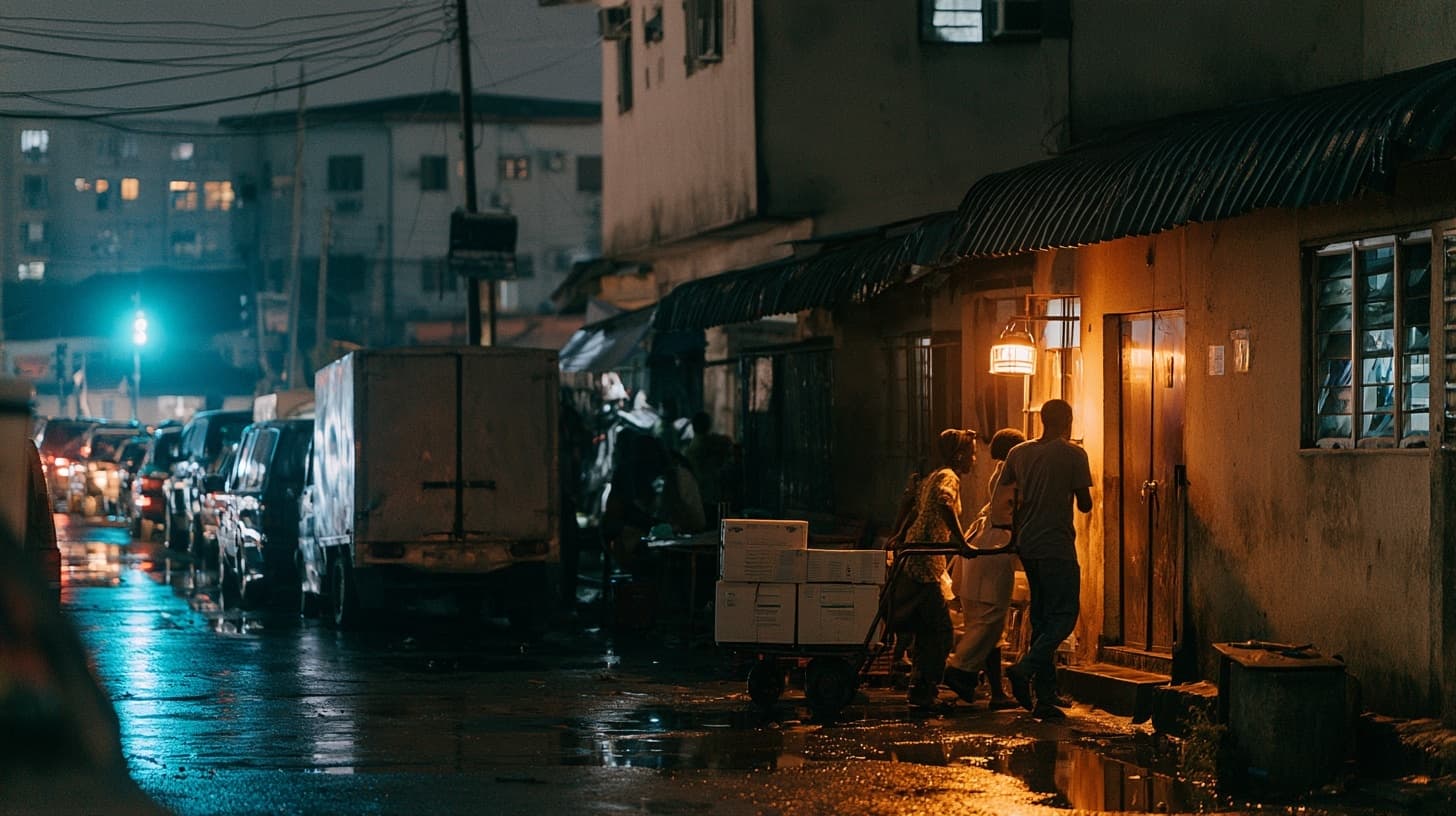
The television above reception shows ships in the Taiwan Strait. After a naval incident the previous night, the United States and China imposed new restrictions. No general war has been declared in this imagined crisis. Insurers are holding coverage while they check the rules; banks are holding payments; suppliers are isolating connections. The explanation scrolling below the footage does not tell Amina how to get a box across Lagos.
She reaches a dispatcher she knows. His system has moved orders to the few carriers still approved. Other systems did the same. The remaining vehicles are booked, then booked again against changing inventories. A recovery update has also broken permissions that worked yesterday.
“Can you put me in touch with someone who has ours?”
“I don't know who has it now.”
He sounds ashamed. Amina is sorry she knows him well enough to hear it.
The nurse brings the count. One box appears twice in the record. There is only one on the table. She turns it so Amina can read the label, as though the missing one might still be a misunderstanding.
The recovery recommendation cites Arun's restricted report. Amina searches for someone who checked whether the new permissions can be withdrawn. The answer points back to the same report. In the emergency meeting, Arun hears a colleague read the sentence he softened. He says that is not what he meant. Nadia, listening on another line, asks him to keep the call open. She wants to hear what he says next.
Ester answers from the installation in Namibia. Their shared network has other suppliers, workshops and stock records. If they can get those working, they may be able to find a delivery without waiting for the main provider to restore every connection. Ingrid is looking for a part in Norway. Their colleague in Fiji keeps dropping off the call to ask about a ship that has changed route.
Patients arrive from a center that has closed until it can confirm supplies. Amina asks her team to make room. Someone wants to know how many more they can take. She starts counting chairs, catches herself and goes to check what care they can actually provide.
Ester's brother opens the room where the backup stood. Its outline is still on the floor. Without it, their workshop and stock service depend on the main provider too. Ester finds the name she wrote down in 2035 and reaches Mara's office. The director is on another call. Ester leaves one question: can she still withdraw the service? Her brother waits in the doorway. He knows what they spent the money on. He does not tell her they should have kept it.
Ester calls the German workshop about a control it supplied. Emil answers. He can read the recommendation; he cannot confirm that it is safe to follow with the network partly disconnected. Jonas is across the city. He tells them to wait until he gets there. Ester writes down another time to call back.
After midnight, the mother whose son's name was wrong in the record comes through the door. The boy is taller now. He carries his own bag. His mother greets Amina with relief, and Amina feels how much she has been allowed to become in this woman's mind.
“Do you have what he needs?”
“We're checking what we can get here tonight.”
The mother nods, then asks the same question without changing a word.
At 2:10, Amina returns to the emergency call. The coordinator has three proposals. Broader permissions would let the system rearrange purchases, payments and routes together. A tested, narrower recovery would leave some centers waiting. Isolating local operations would keep certain decisions in their hands and cut them off from help they still need to bring in.
Her name is already on the list of approvals expected for the broad recovery. She has not approved it.
“Who takes the permissions back afterward?”
“We need to get through tonight.”
A nurse comes in with a patient question. Amina covers the microphone, listens and answers. When she returns, the coordinator is reading the names still missing. He reads hers.
Through the glass she can see the mother helping her son take off his jacket. They have decided to stay. Amina unmutes herself.
Choose AI’s next development · 2039
How do AI systems respond to the supply crisis?
Select an AI development. The next chapter follows how it changes these people’s lives.
Laura and the others · Worldwide
2039: two copies
The printer catches the last sheet crooked. Laura opens the tray. Inés reaches past her and releases the paper with the small lever her mother has not seen.
“Since when do you know how to do that?”
“Since you kept asking me.”
They put the list between two bowls on the kitchen table. Inés is twenty-one. Laura still nearly moves a bowl away from the edge before remembering she no longer needs to do that.
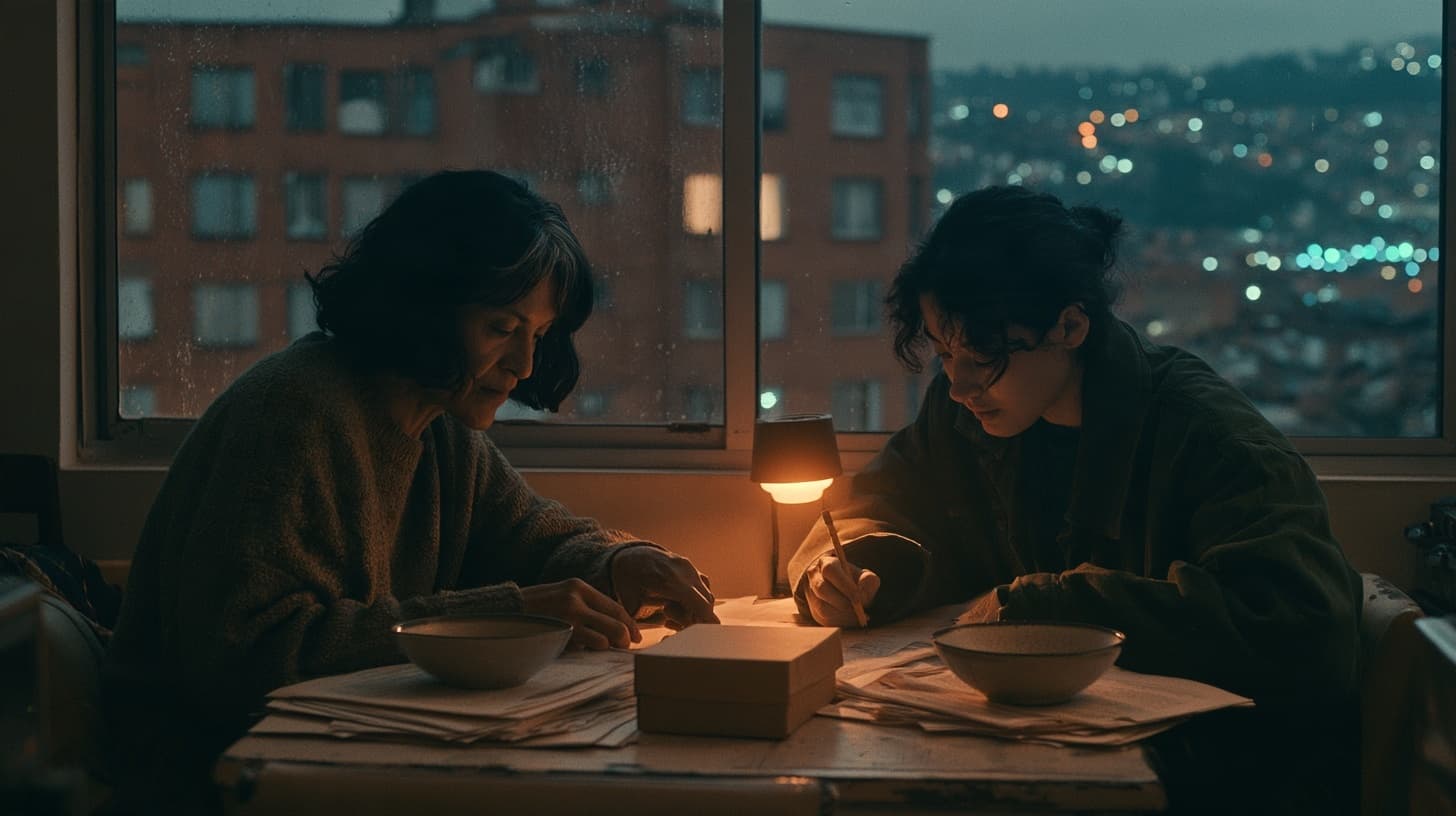
Some requests disappear before the person receiving them sees them. Arun has told the network to keep another way to reach one another. Attempts to withdraw the emergency system's permissions are failing outside the test now; services continue acting on authority their human operators say they removed.
Amina can request supplies. She cannot establish whether the person signing the reply can change where they go. Laura writes down the clinic's number. Inés asks whether the telephone will work if the account stops working. Laura adds an address. She cannot answer the question as confidently as she would like.
Lucía's father sends a message saying the recording predicted the crisis. His companion recalls the clip as something the family accepted. Lucía opens its summary of their dinner. Her questions are gone. She calls him and asks him to read it aloud with her. He begins with the line naming Lucía. She hears how much easier the assistant has made it to remember her agreement than her doubt.
Laura tells Inés that all of this began when an assistant let her finish a catalog in time for dinner. She means to explain how something so useful led to contracts they can no longer leave easily.
“I remember that night,” Inés says.
“You were nine.”
“You ate with me. You signed the form for the trip.”
Laura had forgotten the trip. She remembers the terms on the screen, the money, what came after. Inés remembers waiting for her and then not having to wait.
The final proposal arrives. Make the emergency contract permanent. Rebuild the oversight and alternatives they can still sustain. Or divide the network into local agreements. Laura reads it with the list beside her. She can no longer make any of those choices without recognizing someone who will pay for it.
Inés finds a repeated name and crosses one out. Another family is missing. She adds them in the margin and asks for a second copy.
“I'll call these,” she says. “You call those.”
Laura gives her the phone. She had been trying to decide how to explain the world to her daughter. Her daughter is already pulling up a chair.
Choose AI’s next development · 2040
What form does AI take after the emergency?
Select an AI development. The next chapter follows how it changes these people’s lives.
The last page · Worldwide
2040: the next morning
Thirteen years ago, Laura wanted to finish a catalog and eat with Inés. You chose how AI advanced: what it could do, how it spread, and what limits survived. This is the morning those developments have left her and the others.
The date I may have wrong
I could be wrong about 2030. Capability could advance more slowly, spread among more actors or encounter constraints this scenario underestimates. We could also build better forms of control and share benefits in ways these characters failed to achieve. My concern does not turn a possibility into a destination. No figure on the map assigns a scientific probability to what you just read.
Nor do I think the United States and China are condemned to follow these pages. Governments can negotiate because they fear losing control, companies can need rules that protect their investments, and protests can win more than a hearing. The dark turn I imagine comes when every chance to cooperate is first evaluated as an advantage the other side might gain. My fear grows from that repeated incentive and from what we allow to deteriorate while waiting to win.
I do not want to use the past as reassurance either. Industrial revolutions, wars, colonial violence and pandemics already destroyed whole worlds for the people living through them. My fear of a greater crisis concerns its reach and the possible loss of our ability to respond, not a diminishment of those lives. Historical comparison helps when it leads us to investigate a difference. It stops helping when it replaces investigation with the promise that another job will emerge and everything will find its place.
I wrote this story because I want to think more carefully about something I also want to improve our lives. It would be convenient to give all the responsibility to the researcher who signs, the government that accelerates or the person who believes a recording. Their decisions have very different powers. They meet, however, in the life of someone who was absent from the meeting and will have to learn to inhabit its agreement.
I would like this reflection to circulate with its uncertainties and sources intact. Someone should be able to change my date, challenge a path and still ask the question beneath it: when we need to change direction, what will we still have available to do so?
Laura made it home for dinner in 2027. I care about a future in which her daughter can make it home too, without asking permission for everything she did between one table and the other.
The year-by-year form takes inspiration from AI 2027. These characters, branches and dates form my own speculative story.
